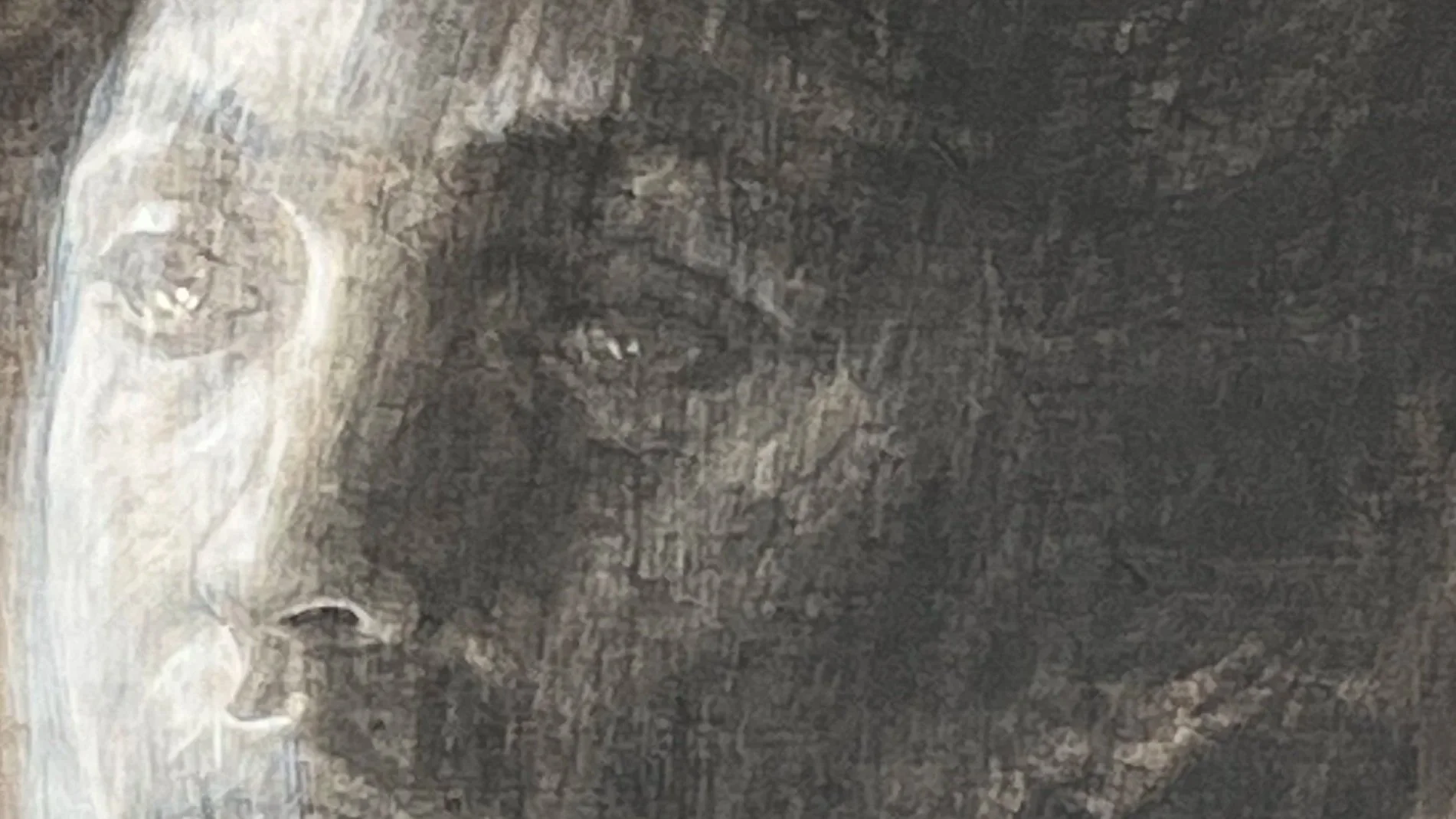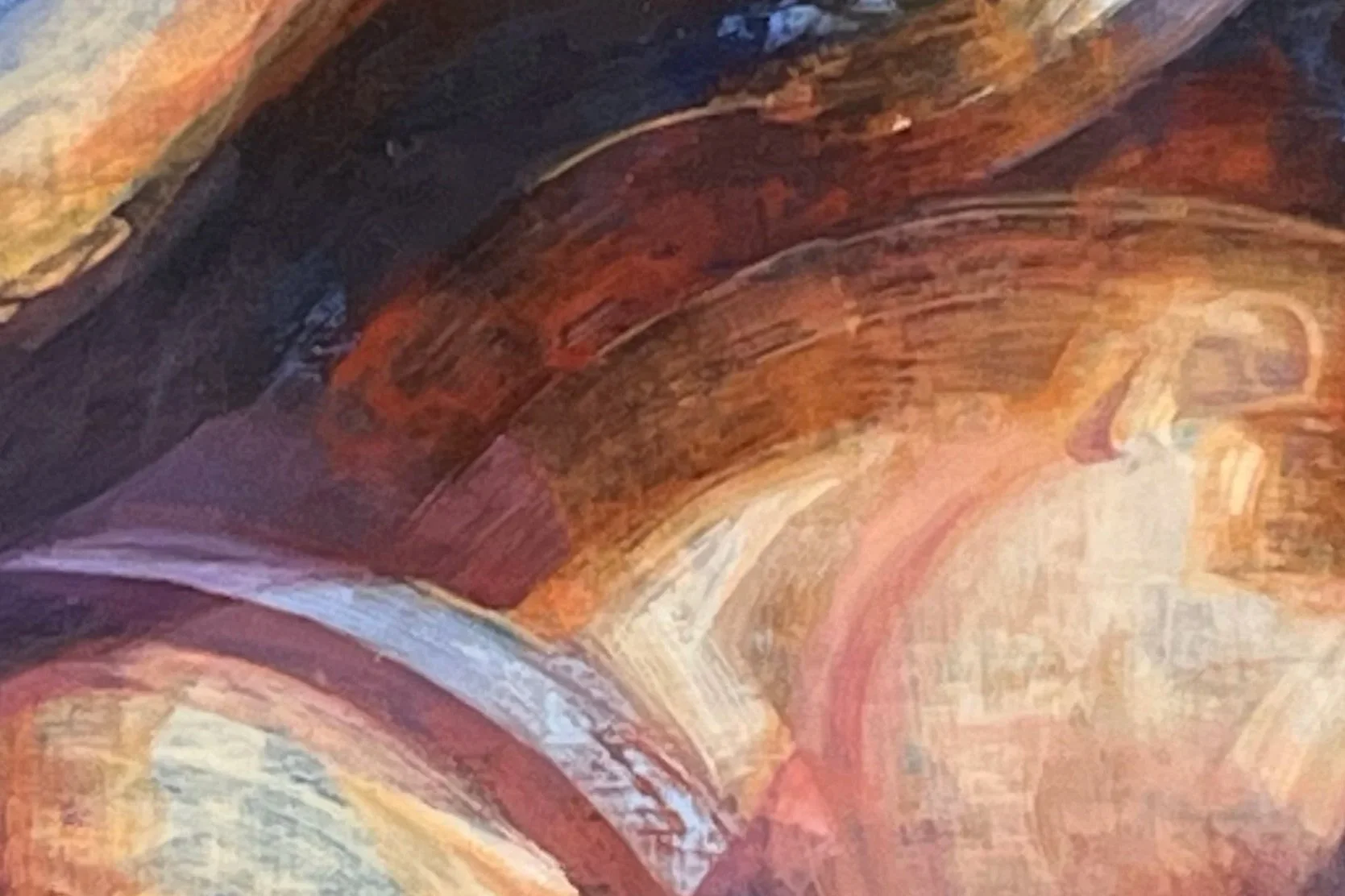
In these drawings and paintings, contemporary figurative expression meets the discipline of classical technique, forming a dialogue between past and present. The works explore themes of identity and memory, not as static ideas but as living, shifting experiences—constructed, questioned, and re-imagined through the act of painting itself.
Rooted in traditional skills such as observation, draughtsmanship, and layered paint and drawing techniques, The approach used in the drawings is unique, utilising graphite powder suspended in mediums and layered with brushes, knives and squeegees on canvas. The pieces simultaneously embrace modern sensibilities: fragmentation of form, psychological atmosphere, and gestural immediacy. This fusion reflects a world where history and the present coexist and overlap.
At a time when artificial intelligence can generate images with startling speed, the peculiar haptic nature of painting becomes more vital than ever. The pressure of a brush, the resistance of paper or canvas, the unpredictability of pigment—these decisions affirm a uniquely human presence. Each stroke is not only a visual mark but a record of attention, intention, and lived experience. Updating and expanding these manual skills is not nostalgia; it is a reaffirmation of what creative labour can offer that algorithms cannot: nuance born from touch, imperfection, and embodied memory.
In this sense, paint and marks function like notes in music—each carrying its own weight, tone, and rhythm. Some are sharp and declarative, others barely a whisper. Together they form a visual composition in which the figurative elements serve as melodic lines, while gestural marks and abstract passages create harmonies, tensions, and counterpoints. The result is a visual score of human experience, unfolding across the surface.
These works invite viewers not only to see an image but to feel the physicality of its making—to sense the artist’s hand navigating between the classical and the contemporary, the remembered and the imagined, the tactile and the conceptual.
In traditional portraiture, terms such as ‘serene or reflective’ are often used to describe the attempt to capture the elusive inner soul of the subject. This worthy pursuit is complicated by the sitter’s face, which when passive, presents a façade that shows no emotion, a riddle that can never be fully explained.
It is a natural human desire to interpret other’s expressions. however neutral the presentation, we know instinctively know that the brain behind the mask never rests. But we can only speculate what the tiniest lifting of an eyebrow signifies in a possible range of emotions from disdain to delirium.
The titles of this series of ‘portraits’ are meant to be ironic, a reflection of the frustration we may possibly feel when trying to interpret what another is thinking.
On a painterly level, the human face as a subject is a beautifully proportioned mesh of interlocking features. We are all made from the same mould but with miniscule differences that give us our individual look. The fact that the face can be reproduced millions of times and still create individuals is one of the marvels of humans. The collection of muscles that form the face combine to subtly express, or not, what is happening on the inside; small signals that take great skill and intuition to clarify.
To compound the mystery, the paintings themselves are, of course, not depictions of actual people but shapes and colour, figments in pigment, that suggest facial expressions and hopefully capture that elusive human emotion.